Ping® by Adlerlaw October 2025 – Navigating AI in Creative Contracts

Third-party generative artificial intelligence systems (AI) are rapidly transforming creative work, introducing new opportunities and real legal and business risks. Many contracts do not yet cover how AI tools are used, who owns resulting intellectual property, or what happens if errors or unlicensed materials are incorporated into your final product. Creative professionals should strongly consider reviewing their contracts and adding provisions for AI use to tackle evolving risks and responsibilities for your industry. This article looks at contractual issues affected by use of AI tools and suggests specific terms to consider. While not exhaustive, the topics in this article target major areas for attention.

Copyright & Intellectual Property (IP) Rights

AI-generated work can pose challenges for copyright protection, licensing, and third-party rights. Many platforms and tools have uncertain or shifting approaches to ownership and proper licensing.

Read more here.

Ping® by Adlerlaw August 2025 Don’t Monkey With NFTs & Nintendo’s Aggressive IP Tactics

Yuga Labs NFT Trademark Dispute Continues.

A jury must decide if the spoofed monkey-themed NFTs misled consumers in the case against Ryder Ripps. NFTs are digital assets. Yuga Labs launched Bored Ape Yacht Club in April 2021. These NFTs are digital images of cartoon apes with various traits and accessories, residing on the Ethereum blockchain. BAYC is known for its exclusivity, limited access, and influence within the NFT space. NFT trading has surged recently, reaching Billion Dollar valuations. Read more here: [LINK]

Nintendo Demonstrates Aggressive IP Tactics

Digital content creators should pay attention to Nintendo’s ongoing lawsuit against Palworld alleging the Pokemon-inspired survival game had infringed on several of Nintendo’s patents revolving around various game mechanics. Nintendo just recently filed corrections on three of the patents involved in a lawsuit with the Japan Patent Office revising the wording of game mechanics Nintendo. Nintendo’s last-minute patent changes have provoked outrage. Read more here: [LINK]

AV Voice Text Clones & Copyright Law

On a related note, AV voice text clones do not violate copyright laws. The Southern District of New York issued ruled in Lehrman et al v. Lovo, Inc., 1-24-cv-03770 (SDNY Jul. 10, 2025) that actors’ voice recordings used to create AI-generated voice clones “identical to” the Plaintiffs’ voices as part of a text-to-speech service was not copyright infringement.

Ping® by Adlerlaw – More AI-Related Legal Issues For Creative Professionals

The Commercial Use of AI in Voiceovers: Legal Considerations and Implications

The rapid advancement of artificial intelligence (AI) technology has revolutionized various industries, including the field of voiceovers. As AI-generated voices become increasingly sophisticated and indistinguishable from human voices, their commercial use has raised significant legal questions and concerns. This article examines the key legal considerations surrounding the commercial use of AI in voiceovers, including copyright and intellectual property issues, privacy and consent requirements, licensing and usage rights, disclosure and transparency obligations, and industry-specific considerations.

To learn more, read the full article here.

Please do not hesitate to contact us with any questions, comments or concerns you may have around this issue.

Ping® by Adlerlaw – Ultimate Guide to Google Ads Suspension Solutions

Has your Google Ads account been suspended? Do you find the suspension notice to be vague and unsubstantiated? You’re not alone! Do you want to know what to do when Google Ads shuts you down? Here are some suggestions.

First, read the Notice! Google’s Policies are intentionally vague and cover a broad range of conduct.

Second, review the response guidelines. Determine what type of response is required and gather “evidence” in support of your position before you respond.

Third, Consult your lawyer!. It’s easy to make mistakes. Presenting your best case in the first instance will improve efficiency and effectiveness.

To learn more about specific steps and responses to Google Ads Account Suspension Notices, please read the full article on the Adler Law website here.

For more information, contact an attorney at the Adler Law Group.

Eagle Rare Unable to Claw Away Eagle Trace in Battle Over Eagle Park. 

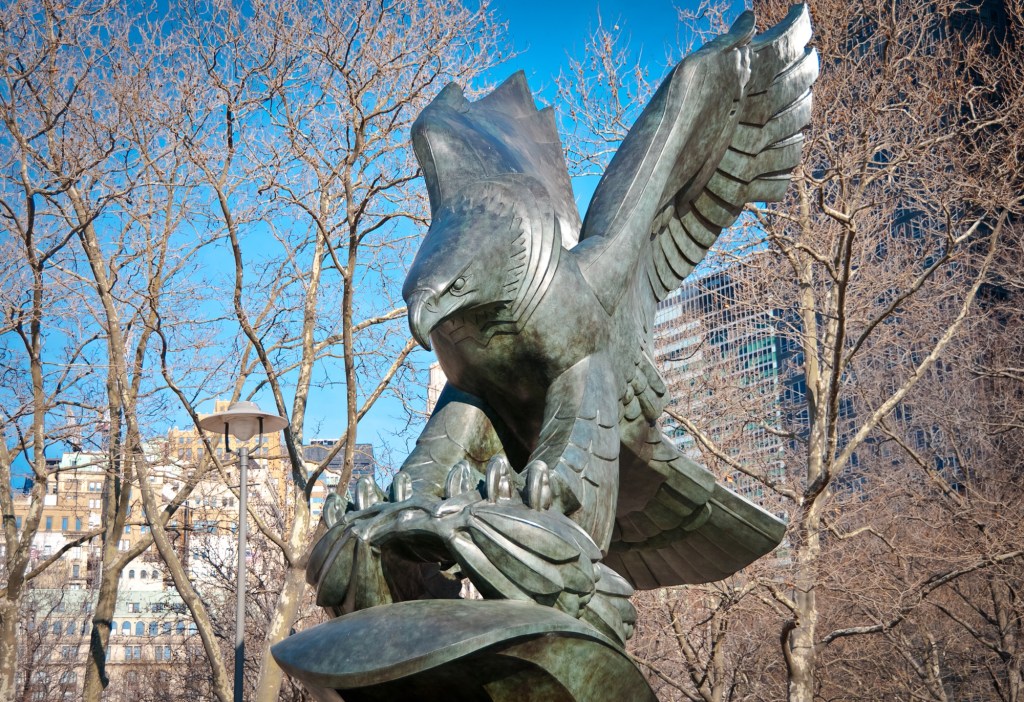
Eagle statue

Applicant, Eagle Trace Brewing Company LLC, applied to register the following standard-character marks on the Principal Register: EAGLE PARK DISTILLING for “distilled spirits; alcoholic beverages, except beer” in International Class 33;1 and EAGLE PARK BREWING COMPANY for “alcoholic beverages, namely beer” in International Class 32.

Sazerac Brands, opposed both applications on the ground of likelihood of confusion under Section 2(d) of the Trademark Act, 15 U.S.C. § 1052(d), asserting prior rights in and ownership of marks registered on the Principal Register: EAGLE RARE (standard characters) for “bourbon whiskey” in International Class 33;3 and for “whiskey” in International Class 33.

Despite some similarities, including the presence of the word Eagle in the marks, the Board dismissed the opposition.

Read the USPTO TTAB decision here: 

Get In Touch

Adler Law Group

300 Saunders Road, Suite 100
Riverwoods, IL 60015
Toll free Phone & Fax: (866) 734-2568

https://www.adler-law.com/contact/

Ping® by Adlerlaw – The Copyright Implications Of AI-Generated Music

Do you feel like the subject of AI has entered almost every conversation?

This month’s issue of the Ping® Newsletter looks at the Copyright Implications of AI-Generated Music.

For creative professionals and especially musicians, trying to evaluate the impact of AI on both creative and commercial rights and music, raises more questions than it answers. For our quick and by no means exhaustive summary of some of these questions, read more below.

The Copyright implications of AI-generated music is fast becoming a major issue as AI tools capable of creating music that mimics human artists have proliferated. Some key questions include whether AI-generated music can be copyrighted, who owns the rights to AI-generated music, and whether using copyrighted works to train AI models constitutes infringement.

For a discussion of four questions on this topic, visit the Ping® post on adler-law.com. Those questions are:

1. What Is The Current Legal Stance?

2. How Much Human Involvement is Necessary?

3. What Is The The Originality Requirement.

4. What Is Shaping The Ongoing Debate?

Read the full article here.

Please do not hesitate to contact us with any questions, comments or concerns you may have around this issue.

Kardashian YouTube Video of Office Furniture Prompts Lawsuit Against Celeb & Interior Designer

How Can Designers Protect Their Intellectual Property?

Interior Design and knockoff furniture made headlines in a recent New York Times article, most likely due to the celebrity attached to the controversy. The complaint filed by the Judd Foundation against interior design firm Clements Design, Inc. and the designer’s client, Kim Kardashian, alleges claims for trademark infringement, copyright infringement, unfair competition, false advertising, and false endorsement related to the sale and promotion of allegedly knockoff Donald Judd designed furniture.

Filed in California, the Judd Foundation brings its unfair competition claims primarily under 15 USC 1125(a) based upon Clements Design’s and Kardashian’s use of alleged Judd Design knock-off, publicized on Kardashian’s YouTube channel in August 2022.

For more information about this lawsuit, please check out this Business of Home podcast in which I’m honored to be mentioned. That podcast is available here.

Designers take note: the Judd Foundation (in-artfully) alleges the Designer’s use of a photograph of a Judd-designed table in the Designer’s proposal to Kardashian is copyright infringement leading to unfair competition.

Contact Us Today

We have more than 25 years of experience representing clients in state and federal courts, and in the United States Patent & Trademark Office.

Adler Law Group is located in Chicago, Illinois, but serves clients throughout the United States including New York, as well as international clients.

Reach out today for all your trademark, copyright, licensing, litigation and business issues.

Ping® by Adlerlaw January 2024 – A Brief Comparison of NY and IL NIL laws.

This month’s issue of Ping® highlights some trends in digital advertising. On June 29th, 2021, Illinois passed a Name, Image, Likeness (NIL) law for their colleges and institutions allowing a student-athlete to earn compensation commensurate with market value while enrolled at a postsecondary educational institution, and obtain and retain a certified agent for any matter or activity relating to such compensation.  This has prompted some discussions around different states treatment of right of publicity laws. This month’s issue of Ping® briefly compares NY and IL NIL laws.

Illinois vs New York Right of Publicity Acts: Key Differences and Protections

A Brief Comparison of the Illinois & New York Right of Publicity Acts

The Illinois Right of Publicity Act

The Illinois Right of Publicity Act is a state law that protects the commercial value of an individual’s identity. It prohibits the unauthorized use of an individual’s “Identity,” which means any attribute of an individual that serves to identify that individual to an ordinary, reasonable viewer or listener, including but not limited to (i) name, (ii) signature, (iii) photograph, (iv) image, (v) likeness, or (vi) voice. The act also allows individuals to transfer their right of publicity to their heirs after death. However, the Illinois law is unique in that it provides for a broad definition of “commercial purpose,” which includes any use that is “primarily intended for commercial advantage or monetary gain.” This means that even non-commercial uses of an individual’s identity could be considered a violation of the law if they are intended to promote a product or service.

Learn More About Illinois Right of Publicity Act

The New York Right of Publicity Act

The New York Right of Publicity Act is another state law that protects an individual’s right to control the commercial use of their name, image, or likeness. However, unlike the Illinois law, New York’s law only applies to uses for advertising or trade purposes. This means that individuals in New York may have less protection against non-commercial uses of their identity. Additionally, the New York law does not provide for the transfer of an individual’s right of publicity after death, meaning that the right to control the commercial use of their identity ends when they pass away.

However, the New York Act provides some post-mortem protection for certain commercial exploitations of individuals’ rights of publicity for 40 years after death for those persons whose publicity rights had commercial value, at the time of or due to, their death. There are a number of other limitations, exceptions and nuances, including that protections only arise from deaths after May 29, 2021.

Learn More About New York Right of Publicity Act

Ping® By Adlerlaw – The Importance of Trademarks for Lighting Designers.

A recent Trademark Trial and Appeal Board (TTAB) decision is noteworthy for the lighting-design industry. This trademark application rejection sheds light on strategies for lighting designers seeking to protect their trademarks. This begins with the approach to the application process itself. 

In In re B-K Lighting, Inc., Serial No. 88769422 (January 27, 2023) [not precedential], the USPTO refused to register “AGI2” for “lighting fixtures,” finding confusion likely with the registered mark “AGI & Design” for lights, lighting assemblies, and light fixtures for architectural signage. As is often the case, applicant B-K Lighting was left scrambling to distinguish its trademark from the cited “AGI & Design” registration. The TTAB’s analysis of nature and relatedness of the goods, the trade channels, and the classes of purchasers, may be helpful to other brands in the lighting industry when trying to protect their trademarks.

Read the full article here.

Ping® December 2021 – Data Protection & Copyright Law 

Globally, non-profits, NGOs, and environmental advocacy organizations are expanding scientific data collection while combining this data with data from third parties. Data scientists increasingly find themselves applying creative thought the the selection of tools and instruments, calibration of those instruments, and the process and selection of data to measure. This combined data is then used for synthesis, modeling and reporting, with the goal of making some or all of it available to the public. As Data scientists look to make these resources public, there are concerns with protecting the integrity, availability, and accessibility, of these resources. Since availability and accessibility and driven by funding, there is a need to commercialize these assets.

I recently had the honor of discussing the question of what legal rights exist in data at the Environmental Defense Fund‘s monthly Lunch & Learn.

In legal terms, those rights are intellectual property (IP) rights such as copyright, patents, and trademarks, confidentiality obligations, and contract rights. Each IP right has its own rules, and applying those rules to data leads to a complex, multi-layered analysis where the law can be unsettled and uncertain.

The principal areas of law discussed were copyright and contracts. The other forms of IP rights such as Patent, and Trademark did not apply to this discussion on data insofar as the term refers to information only, as opposed to a method or process applied to that data (Patent). A trademark is a source identifier that distinguishes one company, product or service from another and  which is used to prevent confusion in the marketplace.

If you would like a copy of the Presentation in .PDF format, please Subscribe to Ping® -Arts, Entertainment, Media,  Communications, & Technology  Legal News From Adler Law Group.